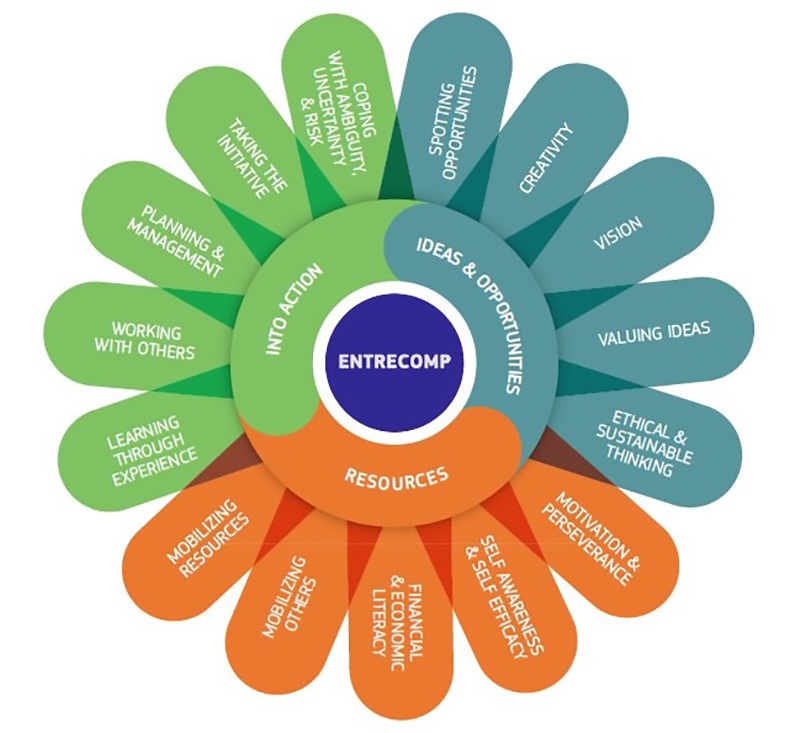
Taking the initiative = the student acts independentlyOrganise a simple event with students. Plan and formulate goals. Let students take responsibility for decision-making and their actions when performing simple tasks up to large projects. Let students initiate the processes that create value.
Planning and management = the students plan the workShow students how to set short-term and long-term goals. Set priorities, define action plans, and adapt to unpredictable changes. Students can evaluate their know-how and are not afraid of making mistakes because they will learn from them. They can adapt to changing circumstances.
Coping with uncertainty, ambiguity, and riskEncourage students to try new things, not to be afraid of mistakes and to work with mistakes. When solving problems, they can build on their experiences and tell the difference between acceptable and unacceptable risks. They can try to eliminate the risk of failure by testing ideas and prototypes or by involving other team members.
Working with othersGive students as many opportunities as possible to work together and try out different roles in the team. Let students explain their attitudes, defend their opinions and ideas, and respect the opinions of others. According to their strengths, they can play a role in the team and work alone or as part of the team.
Learning through experienceReflect, reflect, reflect. Teach students to learn. Teach them to learn from experience. Pass on experience to others and leave enough space for others to gain experience. Support the ability of students to self-reflect and critically accept the opinions of others.
The importance of entrepreneurship education is emphasised in the
EntreComp: The Entrepreneurship Competence Framework, which sets out a general key competency framework for anyone.


 Zřizovatelem Lipky je Jihomoravský kraj.